Showing posts with label ds. Show all posts

2020-12-29

The Pepsi DS

Disclaimer: This article was written as a YouTube Video script, and hence may make reference to audio of visual elements not available on this page.

It was only a few weeks ago that the McDonalds special edition Nintendo DSi was brought into the mainstream by Nick Robinson's YouTube video. That system was distributed to Japanese McDonalds stores along with one of two special training DS cartridge games, but did you know that this was not the first specially branded DS console made in collaboration with a food company?

This title for first branded DS goes back further than the DSi, further than even the Nintendo DS Lite, all the way back to the classic grey original Nintendo DS. While it may not be the first specially branded DS, the title for the first branded DS by a food company definitely goes to the PEPSI X NINTENDO collaboration Nintendo DS, a blue branded recolouring of the original DS' plastic, with a specially printed logo above the Nintendo badge.

I found out about this special DS whilst looking at different game auctions on Yahoo Auctions Japan. It can be interesting to see what video game things exist in Japan, and this system piqued my interest. So how did this special DS come into existence?

Link to Auction: https://page.auctions.yahoo.co.jp/jp/auction/o448087868

Pepsi has a long history in Japan. The cola drink was launched by the Japan Pepsi Cola Company in 1958. As well as the soft drink Pepsi, other PepsiCo brands have become some of the largest food brands in Japan, with Pepsi being a popular beverage in Japan.

Source for Pepsi History: https://www.pepsico.com/pepsicojapan.html

Pepsi Twist and Diet Pepsi Twist are two low-sugar Pepsi variations, originally released in 2000 in the United States. When saccharin was used to create a lower-sugar version of Pepsi, the artificial sweetener left a bad after-taste. In order to counteract this, the decision was made to make the low-sugar drink lemon-flavoured. When aspartame became more common, Pepsi was later able to make a low-sugar variant of Pepsi that tasted much more like normal Pepsi, without having to add other flavours, although this isn't really important for the story of this device.

https://en.wikipedia.org/wiki/Pepsi_Twist

To advertise this drink's launch in Japan, Pepsi partnered with Nintendo to make a limited run of 1000 special, blue Nintendo DS'. In 2005 Pepsi started a campaign where with the purchase of a 500ml bottle of Pepsi Twist or Diet Pepsi Twist, you would get one of 30 Nintendo-themed bottlecaps, and with the purchase of a 1.5 litre bottle of the drink, you would get one of eight rolls of tape featuring a level from Super Mario Bros. With the purchase of Pepsi Twist products in Japan, customers were also given the chance to win one of these limited edition consoles. While unlike the McDonalds DSi, which came with one of two training games to be used by staff, since the Pepsi DS was just a promotional item, it did not have any games or software with it, although it would have been cool to see a rare limited-run Pepsi-themed game. Although the DS did not come with a game, it did however come with a range of other special accessories. The console came with a blue metal case for the system, branded with the Nintendo DS and Pepsi logos, as well as a set of Pepsi-branded headphones as well as two blue DS cartridge covers. The DS also comes with a leaflet for the special DS as well as all the other things that come with a normal DS such as manuals for your system and your standard stylus.

http://devkits.handheldmuseum.com/NintendoDSPepsi/index.htm

https://www.ign.com/articles/2005/02/16/pepsi-introduces-special-edition-ds

This was not the first branded console, and will be far from the last. The Pepsi DS is an interesting look at how classic consoles were combined with the marketing of the time to create something unique. Who knows what the future will bring for consoles. Maybe KFC will make a gaming PC that can heat your chicken or something. Wait, they are doing that. Maybe in the future I can make something about that.

2020-05-07

Anime on the DS - DSvision

Image From: Link
When the Nintendo DS launched in the 2000s, it still did not have an built-in web browser. This meant that users could not easily access the internet (except using a special internet browser cartridge which had not yet been released), and this made steaming services nigh impossible. Streaming services at this point were not common online either for any platform. This was a time before YouTube, and when Netflix still operated by mailing DVDs. This meant that if someone wanted to get anime or other media on the DS it had to distributed physically.

After the Japanese company AM3 released their Advance Video Smart Media Player in 2003, it seemed like the next logical step would be to release an equivalent for the much newer and more powerful Nintendo DS hardware, and DSvision released in 2008 would be just that.

The system, comprising of a cartridge similar to the format that would later be used for Nintendo DS flash cartridges was used. This was a standard DS sized cartridge with a slot on the side, into which a micro-SD card could be inserted. This micro-SD card would contain the movie that you could watch on the system, in a similar way to how the smart media cards held the content for the Gameboy Advance Video. Pre-recorded micro-SD cards could be purchased, or one could buy content on the now defunct official website dsvision.jp, which sold content that could be transferred to the micro-SD card using a program known as 'DSvisionラック' or 'DSvision Rack'. Unlike the previous Advance Video for the GBA which planned to have different content types, and was not able to within its lifespan, the DSvision sold books on the official website that could be read on the DSvision. In addition to traditional books, the service also sold manga as well as educational materials. Quite notably like the previous system (the Advance Video), the DSvision had Pokemon titles including full movies which could be purchased for download, with many in the 300-500 Yen price range. The full movie MewTwo Strikes Back was available for 500 Yen in its entirety or over 85 minutes runtime, and it could fit onto your micro-SD card only taking up a measly 184 MB. And even more impressive some manga titles were available for download for a price of only 32 Yen. Some animated content could even at one point be downloaded from the DSvision website for free, including the first episode of やわらか戦車 (Soft Tank), a popular online animated series that ran for over 50 episodes, as well as モフ☆モフ (Mofu☆Mofu), which was another short online animated series.

At this point is is unknown what type of DRM was used or if a user could load their own content onto the micro-SD card to be read by the DSvision cartridge. The DSvision system would never quite catch on, and this would be another great idea that for better or for worse would not be released internationally. The DSvision website and the AM3 website would eventually disappear along with AM3 itself and it would never be seen again.
Image From: Link


2020-02-21

Anime on Gameboy Advance - PLAY-YAN & PLAY-YAN micro

Continuing the series of unusual ways to watch Anime on the GBA is this look at the Japan exclusive GBA accessories, the PLAY-YAN and PLAY-YAN micro. The PLAY-YAN was also released in Europe under the name 'Nintendo MP3 Player', and 'MP4 Player for GBA' in China by the company iQue, which is well known for distributing Chinese Versions of Nintendo products [3].
Video about the PLAY-YAN micro

Image From: Link
Image From: Link
Image From: Link
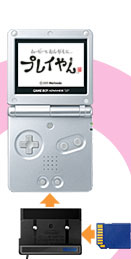
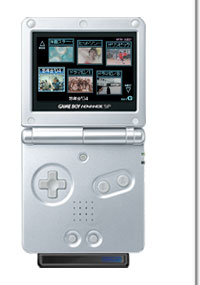
The PLAY-YAN was a portable audio and video player developed and released by Nintendo for the Gameboy Advance SP that was capable of playing .ASF format movies and .mp3 format audio from standard SD cards of up to 2 GB in size [1] [2]. The adaptor was also compatible with the Gameboy Micro and the Nintendo DS [1]. The device was similar in concept to AM3's Smart Media Player in that it could play media files off of a media card, except for the fact that the PLAY-YAN used SD cards, could be used to play audio files in addition to videos and that the PLAY-YAN allows users to add their own files and play them. The PLAY-YAN retailed in Japan at a price of 5, 000 yen.

Image From: Link
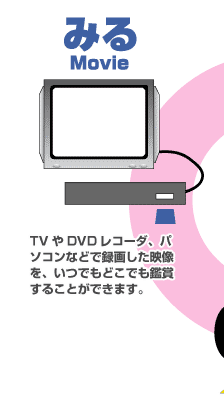
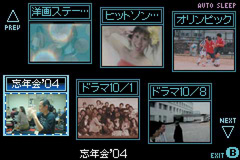
The PLAY-YAN could play .asf files recorded from TVS, PCs, and DVD recorders. The movie list is displayed with thumbnails to make it easier to find a particular video [1].


Image From: Link
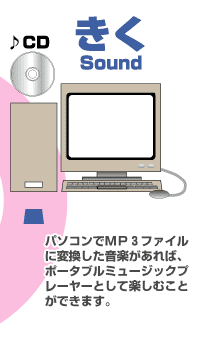
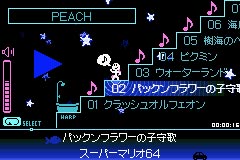
The .mp3 format audio files on the PLAY-YAN can be played with shuffle and song repeat. The file browser supports ID3 tags, as well as allows files to be nested within folders. You can also adjust the surround effect level and set the bass effect [1]. Pressing the 'A' button while listening to music can activate a secret minigame. More details can be found here.

The official Nintendo page for the PLAY-YAN also has a 'garage' section which offers 12 downloadable minigames, as well as a 13th hidden game at the bottom of the page which can be found here. As of September 11 2005, the PLAY-YAN was discontinued in favour of the PLAY-YAN micro.

Image From: Link

Alongside the release of the Gameboy Micro in Japan, an updated version of the device known as the PLAY-YAN micro was released also for 5,000 yen. The PLAY-YAN micro, in addition to the .asf playback of the original now also supports .mp4 formatted videos as well as had improved audio quality through the inbuilt headphone jack. The PLAY-YAN micro removed support for the minigames. The PLAY-YAN micro was only available through Nintendo of Japan's online store, and could come with a computer program on a CD called 'MediaStage Ver. 4.4 for Nintendo', which allowed users to manage video and music files on a computer. This program would cost an additional 1,000 yen [3].

The sick-figure that appears in the music menu on the Japanese version of the hardware is also a character from the Japanese exclusive GBA game Rhythm Tengoku as well as the arcade game Night Walk ans was later used as a visualisation on the 3DS for its sound feature [3].

Give Some Support By Subscribing on YouTube

ads

My Thoughts of FUNA's Anime Adaptations

The Evolution of Funa’s Isekai: A Retrospective on Three Anime Adaptations The Isekai genre is a staple of modern anime, but few authors hav...