2026-07-06

My Thoughts of FUNA's Anime Adaptations


The Evolution of Funa’s Isekai: A Retrospective on Three Anime Adaptations

The Isekai genre is a staple of modern anime, but few authors have had their works adapted with as much consistency—and chronological confusion—as the author known as Funa. With three distinct anime adaptations under their belt, Funa’s catalog offers a fascinating look at how light novel concepts translate to the screen. From the overpowered protagonist of Didn't I Say to Make My Abilities Average in the Next Life?! to the potion-crafting antics of I Shall Survive Using Potions!, these shows reveal a clear progression in writing style, character tropes, and production philosophy.

A Chronological Paradox: Adapting the Catalogue in Reverse

One of the most intriguing aspects of Funa’s anime adaptations is the order in which they were produced. While I Shall Survive Using Potions! was the author’s first published work, it was the last of the three to receive an anime adaptation. Conversely, Didn't I Say to Make My Abilities Average in the Next Life?! was the third work published but the first to hit the screen. 

This "reverse-order" approach suggests that production committees were likely testing the waters with the most promising title first. Once Average Abilities proved successful, studios began working their way back through the author’s bibliography. Because these projects were handled by different studios, each series carries a distinct visual identity and art style, reflecting the unique creative vision of the teams behind them rather than a unified aesthetic.

The Gold Standard: Average Abilities and Creative Liberties

Of the three adaptations, Didn't I Say to Make My Abilities Average in the Next Life?! remains the standout. It is a prime example of how an adaptation can take creative risks, even if those risks are controversial. A notable example is the redesign of the "nanobots." In the original light novel, these were depicted as simple, functional machines. However, the anime team opted for a more stylized, character-like design—reportedly inspired by the popularity of Puck from Re:Zero at the time. 

While some purists might argue that the source material should stand on its own, this change highlights the industry’s tendency to chase current trends to ensure broader appeal. Despite ending on a dramatic cliffhanger involving dragons and nuclear-level stakes, the series remains the most polished and engaging of the trio.

The "Lazy" Writing Trap in I Shall Survive Using Potions!

The most recent adaptation, I Shall Survive Using Potions!, provides a stark contrast to the earlier works. While it is a charming show, it suffers from what can be described as "lazy" narrative mechanics. In many Isekai stories, the protagonist’s power is a tool that requires creative application to overcome obstacles. In Potions!, however, the protagonist’s ability to create any liquid with any effect acts as a "get out of jail free" card. 

Whether she needs a gold-detecting device or a complex solution to a political problem, she simply manifests a potion in the shape of the required tool. This lack of limitation removes the tension from many scenarios, making the writing feel generic compared to the more tactical, albeit overpowered, approach seen in Average Abilities. It is a clear indicator that this was Funa’s earliest work; the writing lacks the refinement and structural constraints that make for a truly compelling power fantasy.

Recurring Tropes: The "Young" Protagonist Archetype

Across all three of Funa’s works, a specific character archetype emerges: the female protagonist who is reincarnated into a world where she is perceived as significantly younger than she actually is. This trope serves as a recurring hurdle for the characters, as they are constantly underestimated by those around them. 

Whether it is a conscious choice by the author to iterate on what works or simply a recurring preference, this dynamic creates a consistent theme of "hidden competence." The protagonist is always the smartest person in the room, yet they must constantly navigate the social stigma of being viewed as a child. This creates a shared DNA between 80,000 Gold for My Retirement, Average Abilities, and I Shall Survive Using Potions!, tying them together despite their different settings and power systems.

Aesthetic Highlights: The Power of Presentation

While the writing quality varies, the production value of I Shall Survive Using Potions! deserves credit, particularly regarding its opening and closing sequences. The ending theme, in particular, is a masterclass in self-referential charm. It utilizes the show’s unique art style to highlight various characters and events in a playful, entertaining way. These small touches—the font design, the animation fluidity, and the thematic consistency—show that even when the narrative feels generic, the production team’s commitment to the show’s "vibe" can elevate the overall viewing experience.

Key Takeaways

Funa’s anime adaptations offer a unique case study in how an author’s early works can be retroactively polished and presented to modern audiences. While the chronological release order was unconventional, it allowed studios to experiment with different visual styles and narrative tones. Ultimately, the progression from the tactical, high-stakes world of Average Abilities to the more convenient, potion-based solutions of I Shall Survive Using Potions! highlights the evolution of the author’s writing, proving that while tropes like the "underestimated young protagonist" remain consistent, the execution of power systems is what truly defines the quality of an Isekai series.

Note: This article was created with the assistance of AI.


Ameku MD Case 1 Review


Is Ameku Takao no Tsuri Karte the Anime Version of House M.D.?

The latest anime season has officially arrived, bringing with it a fresh wave of series to explore. Among the most intriguing new titles is Ameku Takao no Tsuri Karte (also known as Ameku M.D.: Doctor Detective). If you are a fan of medical dramas or mystery procedurals, this show might feel strangely familiar. From its premise to its protagonist’s abrasive personality, the series draws clear inspiration from the iconic American medical drama House M.D., yet it manages to carve out its own unique identity within the anime landscape.

A Genius Doctor with a Detective’s Instinct

At the heart of Ameku M.D. is the titular character, Ameku. Much like Gregory House, Ameku is a brilliant medical professional who possesses an uncanny ability to solve complex cases that baffle everyone else. She is a young woman who operates with a high success rate, often identifying the root cause of a medical mystery long before her peers or the authorities can piece it together.

However, her genius comes with a catch: she is notoriously difficult to work with. Much like the character she is modelled after, Ameku struggles with interpersonal relationships, often alienating those around her. While she is a doctor by trade, the series leans heavily into the "detective" aspect of her role. She frequently collaborates with the police, using her specialized medical knowledge to decode crime scenes and uncover the truth behind mysterious deaths.

The "House" Connection: A Play on Words

The parallels to House M.D. go beyond just personality and profession. The show seems to lean into the comparison with a clever bit of meta-humour regarding the protagonist's living situation. Ameku resides in a house built directly on the roof of the hospital where she works. 

This "house at the hospital" setup is almost certainly a deliberate nod to the House M.D. franchise. It is a playful wink to the audience, acknowledging the inevitable comparisons that will arise. While the show features a small, young Japanese woman rather than a cynical, middle-aged American man (played by the British Hugh Laurie), the archetype remains the same: the brilliant, antisocial expert who is the only one capable of solving the "unsolvable."

Analyzing the First Case: Chekhov’s Dinosaur

The first two episodes of the series establish the show’s procedural rhythm. The premiere introduces a case involving a victim found dead with mysterious blue blood. While the initial investigation suggests an animal attack, the show employs classic narrative foreshadowing to guide the viewer toward the truth.

Early in the episode, the narrative highlights a pamphlet for a dinosaur exhibit. In storytelling, this is a classic example of "Chekhov’s Gun"—if a dinosaur exhibit is mentioned or shown early on, it is almost certainly going to be the key to solving the mystery. By the time the case reaches its conclusion, the connection between the exhibit and the crime becomes clear, showcasing how the show intends to balance medical drama with traditional detective tropes.

Why Medical Mysteries Are a Rare Breed in Anime

Medical dramas are a staple of Western television, but they are surprisingly rare in the world of anime. While there have been a few series that touch upon medical themes or use hospitals as a backdrop, few have committed to the "medical detective" subgenre with this level of focus. 

Ameku M.D. stands out because it treats the hospital as a base of operations for a broader investigative narrative. Even though the characters spend a significant amount of time outside the hospital walls working on police cases, the medical expertise remains the primary tool for resolution. It is a refreshing change of pace for viewers who are tired of the typical high school or fantasy settings that dominate the medium.

Final Thoughts on the Season’s Newest Mystery

Whether you are a die-hard fan of medical procedurals or just looking for something different this season, Ameku M.D.: Doctor Detective offers a compelling blend of genres. It successfully captures the "genius detective" trope while grounding it in a medical context that feels both fresh and familiar. As the season progresses, it will be interesting to see if Ameku continues to evolve beyond her House M.D. roots or if she will fully embrace the "Mrs. House" moniker that fans are already beginning to assign her.

Key Takeaways

Ameku M.D.: Doctor Detective successfully adapts the classic "brilliant but antisocial" medical genius archetype into an anime format, drawing clear inspiration from House M.D. while maintaining its own unique tone. The series distinguishes itself by blending traditional medical drama with police procedural elements, using the protagonist's specialized knowledge to solve complex crimes. Through clever narrative foreshadowing and a meta-humorous approach to its own premise, the show provides a refreshing, mystery-focused alternative to standard seasonal anime offerings.


Note: This article was made with the assistance of AI

My Initial Thoughts About Fruit Master


In the crowded landscape of seasonal anime, fantasy series often struggle to stand out. Enter Fruit Master, a show with a title so long and convoluted that it’s practically designed to be forgotten. But beneath the generic naming conventions lies a story that leans heavily into classic fantasy tropes: the corrupt church, the childhood promise, and the "useless" skill that turns out to be secretly overpowered. 

If you’ve been curious about this series but aren't sure if it’s worth your time, we’re breaking down the premise, the plot twists, and the underlying mechanics of this world. Warning: this breakdown contains spoilers for the first episode and beyond.

The World of Fruit and Faith

In the world of  Fruit Master, the path to becoming an adventurer is strictly regulated by the church. Upon reaching a certain age, citizens participate in a ceremony where they consume a specific fruit. The fruit they eat determines their future job prospects and abilities. 

The stakes are incredibly high: these fruits are inherently dangerous. If a person consumes the wrong one, it can be fatal. Because of this, the church holds absolute power over the populace, acting as the gatekeeper for who gets to become an adventurer and who is relegated to a life of manual labour. It is a classic setup where the religious institution is inherently corrupt, exerting control over the lives of the youth under the guise of "divine" guidance.

The "Useless" Skill: A Familiar Trope

The story follows Light, a young man with dreams of becoming an adventurer alongside his childhood friend, Elena. During their ceremony, Elena is gifted the "Sword Saint" ability, an incredibly powerful, rare skill that marks her for greatness. Light, however, is dealt a seemingly useless hand: the "Fruit Master" skill.

He is told that his skill is merely for growing fruit and that he is unfit to be an adventurer. To keep him from being disheartened, Elena promises to stay by his side and start a farm with him. However, the church intervenes, claiming that Elena’s rare skill is too valuable to be wasted on a farm. They effectively kidnap her, forcing her into the life of an adventurer and separating the two friends. This narrative beat—the protagonist being left behind while their childhood friend rises to the top—is a well-worn path in the fantasy genre, but it sets the stage for Light’s journey to catch up and fulfill his promise.

The Secret Power of the Fruit Master

While working on his farm, Light is joined by a young girl named Iowa. One night, they accidentally consume some of the forbidden fruits. In a world where these fruits are lethal, the expected outcome is death. Instead, Light discovers the true nature of his ability: the "Fruit Master" skill allows him to consume any fruit without dying, granting him new skills in the process.

He gains an 'OK Sword Skill', which is enough to get him started as an F-rank adventurer. Interestingly, Iowa possesses a skill that allows her to identify the abilities of others, similar to the church leaders. This suggests that the church likely knew about Light’s potential all along and lied to him to keep him from becoming "too powerful." Despite this revelation, Light remains surprisingly content with his single additional skill, though the potential for him to become a powerhouse by consuming more fruit remains a tantalizing plot point.

The Corruption of the S-Rank Party

As the story progresses, we learn that Elena’s rise to the top hasn't been the fairy tale it seems. When Light finally encounters her again, she initially pretends not to know him to protect him from her party. In reality, she is trapped in a group of S-rank adventurers who are, quite frankly, terrible people. They view themselves as superior to everyone else and frequently destroy villages and livelihoods during their reckless battles.

The church, once again acting as the antagonist, refuses to let Elena leave the party. This leads to a climactic duel where Light challenges the leader of the S-rank party. Despite being an F-rank adventurer, Light defeats his opponent using nothing more than a broom. This victory proves that the ranking system is a sham—a tool used by the church to suppress talent rather than measure it.

The Illusion of Rank and Authority

The series raises an interesting question about the nature of power. If Light can defeat an S-rank adventurer with a broom, why does he remain an F-rank? The answer is simple: the church controls the rankings. They intentionally keep Light at the bottom to prevent him from taking on high-paying quests and to keep him separated from Elena.

Even when they attempt to kill him by sending him on a "high-ranked" quest disguised as a low-ranked one, the logic falls apart. The show highlights that rank is not a reflection of ability, but a bureaucratic label. By forcing Elena to take on low-level quests just to stay near Light, the church inadvertently reveals how much they fear the duo’s potential. 

Whether you call it Fruit Master, or by its alternate translation, Nut Master (a confusing and inaccurate title that has appeared in some circles), the series is a quintessential example of the "underdog vs. corrupt system" fantasy subgenre.


Note: The text version of this article was made with the assistance of AI

Who Actually is Dina (A Wild Last Boss Appeared)


In the world of Isekai anime, the "reincarnated into a video game" trope is a staple, but A Wild Last Boss Appeared has managed to keep viewers guessing with its complex web of shifting loyalties and hidden agendas. While the story follows a protagonist who finds themselves summoned into the body of their former game character, the real intrigue lies in the supporting cast, specifically, the enigmatic character known as Dina.

As the series progresses, the narrative has shifted from a standard fantasy adventure to a psychological puzzle. Recent episodes have dropped heavy hints that Dina is far more than the helpful sidekick she appears to be. Is she a double agent, a puppet master, or something else entirely? Let’s dive into the evidence and explore the theories surrounding one of the season’s most suspicious characters.

The Growing Suspicion: Why Dina Isn't Who She Seems
For much of the series, Dina has operated in the shadows of the protagonist, Lufas. However, the cracks in her facade began to show during the village arc with the Heaven Wings. Viewers noticed a suspicious pattern: Dina was supposedly waiting for Lufaa.

The suspicion reached a boiling point when a character named Alovenus appeared, seemingly waiting for the same contact. This synchronisation suggests that Dina is playing both sides of the conflict. Her actions in the most recent episodes have all but confirmed this duplicity. She has demonstrated a convenient ability to teleport, which she used to remove a key character from the board just before a major invasion. By isolating those who could potentially stop her, Dina has effectively cleared the path for her own agenda. The final moments of the victim, who used his dying breath to warn others that Dina cannot be trusted, serve as the ultimate red flag.

The Goddess Connection: A Shared Identity?
One of the most compelling theories involves the identity of the Goddess, also referred to as Alovenus. When Lufas was first summoned into the game world, the process was initiated by a message from this Goddess. The name "Alovenus" is shared by both the divine entity and the antagonist working with the demons.

When we look at the visual cues provided in the series, specifically the blue hair and the obscured face of the Goddess in the first episode, the resemblance to Dina is striking. This leads to a chilling possibility: is Dina actually the Goddess? If so, she may be orchestrating a "hero-villain" dichotomy where she climbs the ranks on both sides of the war. By manipulating the demons and the heroes simultaneously, she ensures that she remains the ultimate authority, regardless of who wins the battle.

Knowledge Beyond the Game
Perhaps the most damning evidence against Dina is her awareness of the "real world." Throughout the series, Dina has displayed knowledge of photographs and concepts that exist outside the game’s internal logic. This suggests that she, like the protagonist, may have a connection to the world beyond the screen.

The ending credits of the show provide a visual clue that is hard to ignore: they feature imagery of Dina in the real world. This implies that Dina is not merely an NPC (non-player character) or a programmed entity. She is likely a player or a reincarnated individual who is actively manipulating the game world from within. Whether she is being controlled by someone else or is the mastermind behind the entire scenario, her knowledge of the "outside" confirms that she is a player in a much larger game than the one Lufas thinks they are playing.

Is Dina the Ultimate Villain?
The imagery presented in the show’s ending sequences consistently portrays Dina in a sinister light, suggesting that her "helpful" persona is a carefully constructed mask. Her mastery of mind manipulation and her unique, high-level abilities (such as the ExGate skill) set her apart from every other character. 

The ExGate skill is particularly telling; in the game’s lore, it required an entire group of people to perform the summoning of Lufas. Yet, Dina possesses similar, if not more advanced, capabilities on her own. This power disparity suggests that she is not just a side character, but the primary antagonist that Lufas is destined to face. She isn't just playing both sides; she is likely the architect of the conflict itself, using her influence to guide Lufas toward a specific, perhaps catastrophic, end.

Note: This creation of this article was assisted by AI.

2026-01-20

Update

Hi, it has been a while since I have posted anything here. Don't worry as I have plans. Over the last few years I have been up to a lot, from studies, working, and making videos. Along with that I have written quite a lot. I plan to post a lot of information soon, so I will make quite good use of what I have collected. I will also start posting text to go along with some videos I have been working on.

2023-04-13

Every First Episode in the Winter 2023 Cour

Now that the Winter 2023 cour has come to an end, what better time to discuss the anime that aired this season. This season I have watched episodes from quite a lot of anime. Of course there are some series that I haven’t been able to watch due to them not being available on a platform I use, they are the continuation of a show I haven’t seen, or they don’t seem interesting enough. I will be going through the first episodes of every anime I have watched, and will be giving my thoughts about the series from it, and anime in general this season.

So in no particular order let’s start…

‘Inu ni Nattara Suki na Hito ni Hirowareta.’, or ‘My Life as Inukai-san’s Dog’. First things first, ‘inu’ means dog, so that is quite an appropriate name. This is a bit of a strange anime. In the first episode, the protagonist has somehow become a dog and gets taken in by a classmate who believes that she has found a stray dog. Because of this, the protagonist seems to find himself in some unusual ‘situations’. This is not something that I plan on watching further.

Farming Life in Another World, is another isekai anime where after the protagonist dies, and they get to reincarnate in another world with a wish of their choice. Instead of bringing a smartphone, or getting to live a quiet life, the protagonist chooses to be able to start a farm in their new life. This anime takes some of the elements of Slime 300 to an extreme, with the protagonist gaining a magical farming tool, which gives him some OP abilities as he starts his new life and builds a farm isolated in a forest with wild animals, although it doesn’t seem like it will stay that way for long. The first episode starts off in medias res, with a lively town, and then jumps back in time to show the start of the protagonist's journey. This farming anime seems a lot better than the previous fantasy farming anime we got.

Continuing the theme of isekai we also had ‘Campfire Cooking in Another World with my Absurd Skill’. This anime also starts off in medias res with a brief cold open. After that, this anime starts off as a parody of summoning isekai, with the protagonist getting summoned to another world along with a few other people who are each heroes. The protagonist’s special ability is online shopping, which allows him to purchase items online which instantly appear in front of him. Not thinking that his ability is useful, he parts his way from the adventurers and goes on his own path. This is a unique idea for an isekai, but it seems like it will make this into a food anime.

Next is ‘Saving 80,000 Gold in Another World for My Retirement’. In this isekai anime, Mitsuha gains the ability to travel between earth and a fantasy world. After she finds out about this ability, Mitsuha decides to use it to manipulate the people of the kingdom and use items from earth to gain money and fulfil her capitalist dreams. She found herself in this fantasy world after being manslaughtered and falling off a cliff, ‘Reborn Rich’ style.

‘The Magical Revolution of the Reincarnated Princess and the Genius Young Lady’ is another isekai in this season. This anime is actually a pseudoisekai series as it doesn’t reference the world the protagonist came from and has no impact on the plot of the series. The only thing that you could argue came as a result of her reincarnating is that she creates several items that resemble things found on earth. In the anime, noble society seems to be rigid and formal, whereas she is able to be much more relaxed and casual. It isn’t clear why they chose to make it an isekai, or if it is just to capitalise on the isekai hype.

‘Chillin’ in My 30s after Getting Fired from the Demon King’s Army’ is another fantasy anime, but this time it's not an isekai. In this anime, Dariel -- the protagonist -- is fired from the demon lord’s army by the new rulers as he doesn’t possess magic. After being fired, Dariel finds himself wandering in the forest where he meets a human girl. He ends up finding out that the reason he didn’t possess magic was because he was actually a human.

‘Endo and Kobayashi Live! The Latest on Tsundere Villainess Lieselotte’ is another otome anime. Instead of the protagonist finding themselves in an otome world, instead the two main characters while playing a game gain the ability to communicate with the characters in the game. This is a unique take for an anime, but it doesn’t seem like a very interesting idea. The producers of the series include DMM and NetEase Games, which seems to be an interesting combination. The female main character has the same voice actress as the female main character in ‘Fruit of Evolution’.

Getting on to the second season of ‘The Fruit of Evolution’, a continuation of another unique isekai. The second season of the show continues after the first, and is set in the academy they travelled to, with Seiichi as a teacher. This season doesn’t seem to be as interesting as the first, and has a very different style to the first.

‘Reborn to Master the Blade: From Hero-King to Extraordinary Squire’ is an anime where the protagonist, who was formally the king, is reincarnated in the distant future as a newly-born girl after deciding to devote his next life to becoming the strongest swordbearer. The OP theme sounds similar to some of the music from ‘Spy X Family’.

‘The Reincarnation of the Strongest Exorcist in Another World’ is another reincarnation isekai. The protagonist died in a scene that resembles ancient Japanese folklore, and he is reincarnated as a minor noble in a European-style world. Instead of just relying on European style fantasy, this series incorporates elements of asian mythologies, which is quite unique.

‘Handyman Saitou in Another World’ is another isekai, where someone from a specific profession finds themselves in another world where they can utilise their skills. This series also starts off with a cold open showing Saitou with his party in a dungeon. The episode is made up of a series of vignettes focusing on snapshots of different characters.

Bofuri season 2 also aired this cour. It seems like a weird time to air, as the first episode takes place at christmas, which was a few weeks before the episode aired, although it did have a premiere of the episode before christmas.

There is also the second season of In/Spectre, which is more of the same as the first season. In the first episode Kotoko gives a plausible explanation for a bad mystery and then reveals that that was just a solution she had made up, and what the real cause was.

I have also watched the first episodes of several other anime series this cour, such as ‘Spy Classroom’, ‘The Tale of Outcasts’, ‘ONIMAI’, ‘The Iceblade Sorcerer Shall Rule the World’, and ‘Tomo-chan Is a Girl!’, but I won’t be going into those as this video is starting to get a bit long.

Overall a lot of anime seem to have poorer animation compared to previous seasons. There have been a few unique anime this season as well.

So what did you think about the Winter 2023 season? Did you agree with my assessments, or did you think something else? Leave your thoughts down below. If you liked this video, consider liking the video, commenting down below, and subscribing so that you don’t miss any future videos.

2022-12-26

A Story in 3 Acts - I'm the Villainess, So I'm Taming the Final Boss

I’ve recently finished watching ‘I’m the Villainess, So I’m Taming the Final Boss’ in my never ending quest to watch every isekai anime that comes out. Based on the title of the show, it may sound like it is just a clone of ‘HameFura’, but it is not. While the premise does revolve around a girl who finds herself in the world of an otome game that she had previously been playing and she is reincarnated as the villainess of the story, requiring her to try and avert her death in the game, how she goes about it is quite different. Compared to Katerina, Aileen  is much more intelligent and aware of her surroundings. Her strategy to avoid her death flag involves courting the demon lord and avoiding the final outcome of the first game in the series.

The series is broken into three acts. The first involves Aileen trying to woo the demon lord Claude and avoid everything converging on the eventuality of her death. The second surrounds the plot of the second game in the otome series that Aileen played, and involves her attending a school dressed as a boy to destroy a plot to use demons to destroy the empire. The third act involves lord Claude losing his memory and the royal family trying to break off their engagement, loosely based on the fan disc of the first game, and includes the climax for the entire series.

Unlike Katerina in HameFura, it is repeatedly shown that Aileen, while familiar with the plot of the games isn’t fully aware of every route and the minutia involved in taming each character.

In the first act, after breaking off her original engagement, Aileen heads straight for Claude’s castle in the forest and begs him to marry her, repeatedly until he gives in. The manipulation that Aileen utilises is an interesting approach to take, that is quite a refreshing take to have associated with a main character's personality. Her use of her knowledge of the characters, such as baking biscuits for Almond to bypass him to achieve her goals, and to win their favour and befriend them is a clear example of this.

Throughout this act Aileen repeatedly encounters issues that mirror the events of the game, but did not reflect the actions that Aileen had been taking. It becomes apparent over the course of this act that Lilia, the protagonist of the original game and the new fiancé of Aileen’s previous fiancé was the one that had been orchestrating all of these issues with an aim of forcing Claude to take his demon form and go berserk. Based on Lilia’s actions and what I know from previous isekai series, it seems that she is also knowledgeable about the world she is in, and was probably also reincarnated in that world. Over the course of this act Aileen and Claude slowly fall in love with each other, ending with Aileen professing her profuse love for Claude in the climax of the first act, saving Claude and bringing him back from his dragon form, and creating an interesting scene. The climax built up here is quite intense and is probably one of the most fierce of the entire series. The idea of another character using their knowledge of the game world to manipulate it to the detriment of the protagonist, which will become a running theme over the course of the show doesn’t come off as a completely original idea, having been previously used in MobSeka as a main plot point, even if even if the source material technically did come out earlier.

In the second act, we see how her actions of saving Claude impact on what would be the plot of the second game. Claude has to attend to an arising problem, but Aileen wants to use her knowledge to solve the problem in secret at the school. Aileen has to dress up as a boy due to the prevalence of misogyny in the area. If this is how the series attempts to tackle a social issue, it comes off as just an excuse to set up some jokes based on her gender later on in the act and not any social commentary. It is fascinating to see how the changes that have come about due to the changes Aileen has already made combined with her trying to make changes as a character who wasn’t originally in the story result in her plans not going as she intended.

At the end of the second act Aileen confronts Lilia and confirms that she was reincarnated. We also find out that Lilia only thinks about the people in the world like the game characters and not like actual people, treating her whole time in the world just like a game to be won, which sets up the third and final act of the show.

In the third act, we encounter a Claude who has lost his memories. Obviously the first thing a viewer would think at this point is that Lilia is probably the reason that Claude lost his memories. The Queen, who we also meet is also incessantly trying to call off Aileen’s engagement and make things difficult for her, which also makes her come off as an evil character. Through meeting Claude in secret and using some of the same techniques that she originally used, Aileen gets Claude to fall for her again. This act starts off rather uneventfully other than Claude’s memory loss.

Throughout the series as the stakes begin to get higher and higher, the reliance on deus ex machinas increase dramatically. In the second act, the ending is only resolved when it turns out that Claude is controlling the demons and not the demon snuff. In act 3 there are even more deus ex machinas. Act 3 even starts off with a deus ex machina when Levi helps Aileen escape from a ‘secret mission’.

Almond ends up getting killed by Levi, who is a recurring character in act 3, who you kind of assume is being influenced by Lilia. Almond’s death comes off as needless because it doesn’t really add anything to the plot. Even though Almond is a recurring character and a relatively large part of the overall plot, as a viewer you don’t really build up any emotional connection with the character and his death is similarly not very emotional. Other shows such as ‘Tenkyou no Alderamin’ are able to effectively set up an emotional connection with a character of the course of an episode just to kill them off, even if it does come off as cheap.

Lilia gets her saint sword back and the final episode contains an epic battle between Aileen and Lilia. Lilia references the fact that the other people are just ‘characters’ and that Aileen is the ‘main character’ in front of Levi, and Aileen uses the ‘power of love’ justification for her winning that is such a common trope at this point. Lilia tricks Aileen and almost kills Levi.

By the way, apparently Almond is back again and saves the day. It isn’t really explained how Almond is resurrected or how the climax is actually resolved.

The ending of the series involved yet another deus ex machina. Despite all hope appearing lost and it looking like Lilia was going to win, somehow Almond has the power to break Lilia’s magic wall, allowing Levi to put his eye gem into the Queen’s clock. This also makes Claude wake up and regain his memories for some reason. The guards come to arrest Aileen and protect Lilia, until Claude comes to be Aileen’s deus ex machina. The Queen turns out to actually be evil, and at the end she starts to age as a result. Lilia is caught and people finally see her as the true villain she was. This whole ending is just a series of deus ex machinas. The series at no point establishes any reason why any of this is even able to happen.

The soundtrack used in the series, not the opening or ending themes, reminds me of the music used in the American sci-fi television series ‘Stargate Atlantis’. Talking about the actual themes for the series, the ending for the series has an interesting aesthetic that portrays the themes of the series well, while in itself being unique.

Overall, the series is a pretty unique take on the isekai genre with some interesting ideas. I’d give ‘I’m the Villainess, So I’m Taming the Final Boss’ a rating of 8 out of 10.

2022-06-30

The WebP Rant


Google announced their webP format in 2010 as an alternative to other image formats. webP, based on Google’s VP8 compression, offered much smaller image file sizes for images of similar quality, and was pushed by Google as a way to save on bandwidth and storage by using webP on websites instead of other image formats. webP would also later support animation, which meant it could also be used as an alternative to GIF animations, which were traditionally quite large in terms of their file size, whilst still being of low quality.

Many sites and services have adopted the webP format, and most people have the ability to view the images as support has been built into all major web browsers for quite some time now.

One of the companies that has adopted the use of webP images include Google themselves and YouTube.

Google uses the format on some of their sites, and allows users to upload images in the webP format to google photos. You would expect that Google, the creators of the format, and an organisation that uses the format itself would make the format compatible with more of their services. If I want to use a webP image in a Google Doc, and I drag a webP image into the doc, it will give me an error saying that it is an unsupported image type. To be able to use a webP in a Google Doc, I need to use a program such as Microsoft Paint to first convert the image before inserting it. You heard that right, even Microsoft Paint has been updated to allow you to work with webP images. If I want to copy a webP image from a website, it is even more difficult. I need to download the image first, then convert it, then upload it. This is becoming more of a problem as more websites are beginning to incorporate webP images into their sites. There is also no way to tell if an image is a webP without checking, so I don’t know whether I even need to download an image in the first place unless I try to insert the image, download it, or copy and paste the image url. Google Drawings, Google’s simple cloud image creation and editing tool has quite a lot of the features you would need to quickly mock up an image, or even make a simple YouTube thumbnail even if it isn’t a full featured photo editing program. The app however doesn’t allow you to insert webP images, and doesn’t give webP as an option to export your drawing. The program does however allow you to export a drawing as a PDF, which is a document format, but doesn’t even allow you to export Google’s own image format.

The YouTube site itself uses webP, both for thumbnails, as well as the video previews that are available when hovering over thumbnails. To save on bandwidth, YouTube has begun to encode uploaded thumbnails as webP images for supported devices. The animated previews take advantage of the ability to create animated images to allow a single image to be used as opposed to multiple to create a video preview. In one video from YouTube, they even try to convince other site owners to start using webP images for their sites. Despite the fact that YouTube uses webP images for their own thumbnails, YouTube does not allow you to upload thumbnails which are in the webP format.

Don’t get me wrong, webP images are quite good due to their relatively small file size, even if they take slightly more processing power to decode. Taking images from a camera and converting them to jpeg, PNG, GIF, and webP using ImageMagick at 80% quality, the webP image consistently has the smallest file size.

Well that’s all for this video. If you have any other problems you’ve noticed with other products, consider leaving a comment about it down below, and maybe I’ll make it into a future video.

If you enjoyed this video, like the video, comment down below your thoughts and ideas for future videos, and subscribe and click the bell icon so that you don’t miss any future videos.


2022-06-26

Did This New Anime Steal a Character?


‘Koi to Senkyo to Chocolate’ is a classic highschool anime series from 2012 based on a visual novel, and involving ‘yaoi sticks’. The protagonist’s childhood friend, and fellow member of the ‘Food Research Club’, Chisato has a relatively distinct design.

When I saw the poster for ‘Kinsou no Vermeil: Gakeppuchi Majutsushi wa Saikyou no Yakusai to Mahou Sekai wo Tsukisusumu’ on MAL, I immediately noticed the character of ‘Lilia Kudelfate’ and initially thought it was Chisato, although I then realised that it was completely unrelated.

Comparing the sources, they don’t appear to have been designed by the same artists, but the characters in both seem incredibly similar. Koi to Senkyo to Chocolate was originally a visual novel by Sprite, and later adapted into a manga, and anime series. The Kinsou no Vermeil manga was written by Amana Kouta and illustrated by Umezu Youko, and as far as I can tell, neither of these people were involved with Koi to Senkyo to Chocolate.

Let’s compare the characters to see just how similar these characters’ designs are. To start off, let’s compare their physical appearance. Both characters have a pale complexion, thin eyebrows, and large blue eyes. They both have long, flowing, pink hair with a bunch of hair, or faux twintails on the sides. The school uniforms worn by the two characters are also very similar. Both wear a blue school uniform, with a white dress shirt beneath. The uniforms both have long sleeves, covering the whole arms, and the chest area is left exposed by the jacket, revealing the dress shirt beneath. Both uniforms also terminate with short skirts, either connected to the uniform itself, or as a separate piece of clothing. Around the necks of the characters, they both have a tie. Lilia wears a more traditional necktie, whereas Chisato wears a ribbon in a bow. For Lilia the ribbon appears to have moved from the neck to be used as hair ribbons for her twintails.

One difference that I need to point out about the two characters is that they do have slight differences and differing art styles. This doesn't discount the fact that both characters appear very similar, as differing art styles are common between different studios, and even different releases of the same property.

I don’t want to accuse anyone of plagiarism, but I just wanted to point out that I noticed that both characters’ designs seem to be very similar.

Also, there is a rhinoceros beetle called François.

2022-06-24

Who Actually is Marie? (Trapped in a Dating Sim: The World of Otome Games is Tough for Mobs)

Hello and welcome to another video. In this video we will be having a look at the anime series ‘Trapped in a Dating Sim: The World of Otome Games is Tough For Mobs’. This video will of course contain spoilers for the first season of the show.

‘Trapped in a Dating Sim: The World of Otome Games is Tough For Mobs’ was an unexpectedly popular isekai series from the current cour (クール). The protagonist is forced by his sister to complete routes in an otome game she is playing, so that she doesn’t have to go through difficult or monotonous parts of the game, and for an unknown reason wakes up after being reincarnated in a fantasy world matching the game as a character ‘Leon Fou Bartfort’, a character who does not appear in the game. The game’s main character is supposed to be a girl called ‘Olivia’ who the male characters at the academy are supposed to become romantically involved with. When he arrives at the academy, Leon finds that Marie has taken her place at the academy.

As a character who wasn’t at the academy in the original game, Leon has to use his insight about the world he was in in order to raise his rank and standing so that he would be able to attend the academy in the first place. Similarly, it is implied that Marie was also reincarnated into that world, and that she has also been able to replace Olivia by using knowledge that she has brought from playing the game in her own world. In scenes from Marie’s perspective throughout the series, Marie also comments on aspects of the game such as characters’ weaknesses as the series progresses, and there are scenes where she tries to find the saint items that the protagonist normally collected over the course of the game. To go beyond all doubt as to whether she is a reincarnate, Luxion, Leon’s AI assistant actually references her as being a reincarnate and using her knowledge, when talking to Leon near the end of the final episode of the season.

So who is Marie, and why does she appear to be the only reincarnate other than Leon in this world?

It is entirely possible that there are other reincarnates in this world, and that the series only focuses on these two who happen to gain success in the new world, but if there were others, it would make sense that more things in the world would be different as a result of these mob characters, as opposed to the storyline of the actual game that the world is based on. Even if other people were reincarnated as mob characters, you would expect that at least some of them would end up in high-up positions, and that some of them would tell others that they had been reincarnated. If this were to happen the characters in the series would likely have heard about some people claiming to have been reincarnated. Because of this, it is likely that the only two people that have reincarnated into this world are Leon and Marie.

Because of this, Marie and Leon being the only ones reincarnating, must have some significance. Marie is probably actually Leon’s sister from before he reincarnated, the one who made Leon play the game. So what is the reason for believing that Marie is actually Leon’s sister?

Marie in the series knows things about the plot of the game and the world that it is set in. Because before the reincarnation, Leon’s sister was playing the game, it would make sense that she would have this knowledge about the game. If it was just some random person, they would be unlikely to know about the game, especially in depth, so Marie would likely be a younger person, and someone who had played the game.

If two people were to reincarnate together, it would make sense that they had some sort of connection, rather than them just being two random people. If Marie is Leon’s brother, they would definitely have a connection to each other. At the time of their reincarnation, they weren’t just two people who were related to each other, they were constantly in contact with each other, as Leon’s sister was making him complete the game for her, and their relationship at that time happened to be very strained, and they were not getting on well with each other.

Another huge piece of evidence that Marie might actually be Leon’s sister is that Marie came from a very similar scenario to what Leon’s sister would have come from before they reincarnated. As expressed by Marie in episode 4 of the series, Marie also had a brother, and she also had him play monotonous parts of the game for her. Even if she wasn’t Leon’s sister, it could still be possible that she had a brother in her past life, although a sister having a brother would eliminate a lot of people from being able to be Marie. This is because the average number of children in Japan per mother is less than 2, meaning that a random girl in Japan having a brother would have less than a 50% chance. What’s more is that it would be incredibly unlikely that a random girl with a brother would have forced him to play the game in the same way that Leon’s sister did. This lends great credence to the fact that Marie is actually Leon’s sister from before he reincarnated.

None of this actually guarantees that Marie is Leon’s sister, but it definitely supports the idea, and would make sense from a writing perspective. Because of this, it can reasonably be claimed that Marie actually is in fact Leon’s sister.

None of this actually guarantees that Marie is Leon’s sister, but it definitely supports the idea, and would make sense from a writing perspective. Because of this, it can reasonably be claimed that Marie actually is in fact Leon’s sister.

If you liked this video, consider liking the video, commenting down below your thoughts or any ideas for future videos, and subscribing and clicking that bell so you don’t miss any future videos.

If you want to watch more anime-related videos like this check out some of the other videos on the channel.

2021-11-17

Top 10 Best Crime/Mystery Anime (2021 Edition)

The mystery and crime genre has always been incredibly popular, from books like Sir Arthur Conan Doyle's Sherlock Holmes series, to board games like Cluedo, and modern video games and movies. It is to no surprise, that a number of mystery anime series have also been released over the years. These are my top 10 picks for the best crime and mystery anime series.

Images Sourced from Myanimelist.net
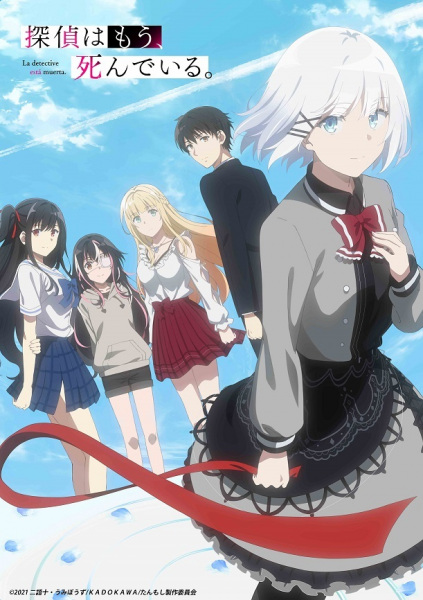
10. Tantei wa Mou, Shindeiru.
Tantei wa Mou, Shindeiru is the most recent anime on this list. Kimizuka Kimihiko has always been predisposed to encountering crimes, but one day becomes involved with Siesta, a detective on a flight as her sidekick through an unusual series of events. After travelling with her for a while, she dies and Kimihiko carries on her legacy by using the deductive skills he learnt from her.


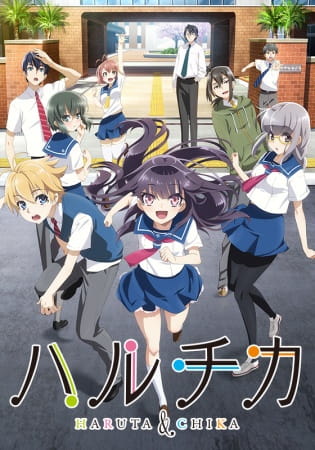
9. HaruChika: Haruta to Chika wa Seishun suru
HaruChika follows Haruta and Chika. The series starts with Chika going to her high school for the first time, and decides to join the school's music club. Haruta, another member of the club, and a childhood friend, solves a series of mysteries that they encounter, whilst trying to find new members for the club and bring the club into prominence. The series focuses less on the actual mysteries than most other mystery shows, and the mysteries are often just a backdrop and plot device for character progression and as a vehicle to recruit new members.


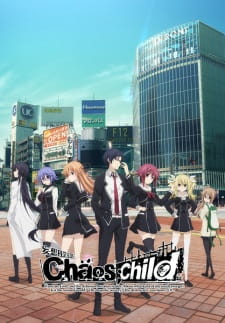
8. Chaos;Child
Set several years after the events of Chaos;Head, Chaos;Child follows mysterious deaths similar to those that occurred in Chaos;Head. Takaru, along with his high school's newspaper club attempt to solve the mystery of these murders, but things are not as they appear. Chaos;Child brings a supernatural element to the typical mystery story, along with unexpected twists in the plot. The series at times can also become quite dark, especially as the plot progresses. The series also continually builds on the previous episodes, and has a cohesive plot throughout.


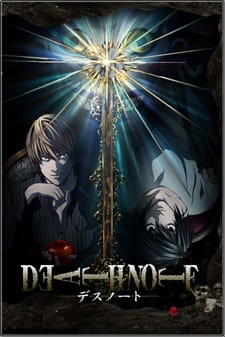
7. Death Note
Death Note was a hugely popular anime when it came out. It surrounds Light Yagami's actions after finding a Death Note, which allows him to kill anyone by writing their name in it. Unlike the other anime on this list which follow the detectives trying to uncover who the killer is, Death Note instead follows the perspective of the criminal through the descent from a normal high schooler into a killer who sees himself as god, and the journey that the authorities, which include his father who is a police officer take to bring down 'Kira'.


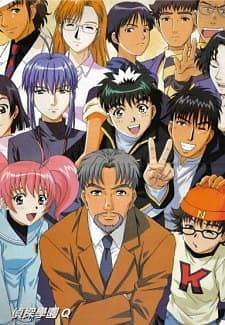
6. Tantei Gakuen Q
Kyuu is a young boy who dreams of becoming a famous detective. After solving a small mystery of some missing money, as well as a murder together with Megu, who has a photographic memory, they are invited to take a test, which could get them into the famous famous detective school, Dan's Detective School (DDS). Despite not passing the test, after seeing promise in him, Dan places him into class 'Q', a special class for 'Qualified' students along with Megu, Kazuma, Kinta, and Ryuu where they solve mysteries, one after the other.


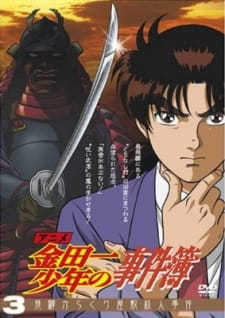
5. Kindaichi Shounen No Jikenbo / Kindaichi Shounen No Jikenbo Returns
Kindaichi Shounen No Jikenbo is a classic of the anime detective series genre. The series follows Kindaichi, a genius high school student who solves crimes that he comes across, generally involving murders. The series covers a wide range of different motives and methods of crimes, and is a great classic series. Although the run of the original television series has long since ended, the franchise was revived in 2014 with Kindaichi Shounen No Jikenbo Returns, which ran for 47 episodes. The series has also received several movie adaptations.


4. Kitsutsuki Tanteidokoro
Kitsutsuki Tanteidokoro, also known as Woodpecker Detective's Office is a detective series set in Meiji-era Japan, based on a 1999 novel. The series follows Ishikawa Takuboku and Kindaichi Kyosuke, a poet and linguist respectively who investigate mysterious occurrences, and solve mysteries. Kitsutsuki Tanteridokoro has a unique art style and storyline.


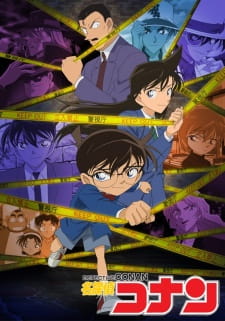
3. Detective Conan (Case Closed)
High school detective Kudo Shinichi is famous in his area, helping to solve difficult crimes for the police. After going to an amusement park with his childhood friend Mouri Ran, and solving a murder that happens to take place on a ride they go on, he follows two other passengers on the ride that seem suspicious. He witnesses a secret deal going on, and after getting caught, is forced to drink the poison APTX 4869. Instead of killing him, the drug ends up changing him into a child, after the criminals abandon the body in the park. In order to get to the bottom of this organisation, and to continue solving crimes without the organisation finding out that he survived, Shinichi assumes the identity of a primary school student under the name Edogawa Conan, and continues to solve crimes in secret. Detective Conan has been running since 1996, and has over a thousand episodes, 24 main series movies, as well as a large number of specials, and crossovers. The series has also received a few live-action adaptations. If you have a bit of time to watch the series, you can even see how the series has evolved over the past 25 years.

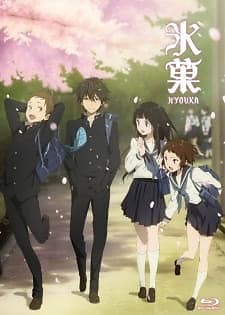
2. Hyouka
Hyouka follows Oreki, a Japanese high school student who tries to conserve energy throughout his daily life. After being convinced by his sister to join his school's Literature Club in order to prevent it from having to close, he meets Chitanda in the club room, and at her request solves the mystery of how she was in the clubroom, despite it being locked from the outside when Oreki arrived. Together with the other members from the new Literature Club, Oreki uses his deductive reasoning to solve a series of different mysteries that the club encounters. Hyouka is a great anime from Kyoto Animation, and is a must-watch for fans of the mystery and high school genres.

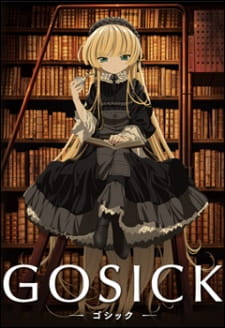
1. Gosick
Gosick is a mystery anime set in a pre-WWII European state called Sauville, and follows the Japanese exchange student Kujou Kazuya, through his time at the school. Due to his black hair, he is ostracised by the other students, and this causes him to meet Victorique, a student who rarely attends class on the top floor of the school's library. Victorique is a girl with a genius detective mind, who solves mysteries for her brother, and as a result, Kujou is dragged into a series of mysteries and adventures. Gosick brings a bit of spin to the traditional mystery genre with its unique stylistic choices and engaging storyline.

2021-07-07

Katarina Never Reincarnated (HameFura)

Disclaimer: This article was written as a YouTube Video script, and hence may make reference to audio of visual elements not available on this page.

Before we begin, this video will contain spoilers for the first season of the isekai anime series ‘My Next Life as a Villainess: All Routes Lead to Doom!’. If you are worried about spoilers, consider bookmarking this video, and coming back after you have watched the series.

After my previous video about Hamefura, and which ending Katerina actually got, did better than any other on my channel, although I guess that is to be expected since that is the only video on the channel, I decided to make another video about the series.

In Hamefura, after Katerina Claes, the show's main character hits her head, it is established that Katerina is the reincarnated form of a Japanese schoolgirl who enjoyed playing otome games, and that before she died, she was playing the game ‘Fortune Lover’. It is also later established that Katerina died as a result of getting hit by a car. The series Hamefura, is shown to be set in the world of Fortune Lover, with the characters from Fortune Lover being people in the world of Hamefura, and Katerina herself being one of the characters from the game.

So what if Katerina isn’t actually in the world of Fortune Lover at all? I’m not just saying that the world Katerina is in isn’t exactly like the Fortune Lover game, I’m saying that Katerina isn’t in the world that she is shown to be in, in the series at all. Throughout the series, Katarina isn’t actually dead, and what is shown to be happening is just in Katerina’s head.

At the start of the series, when Katarina hits her head on the ground, we are shown that this is when Katarina remembers her past. In reality, this point of hitting her head is likely the point that Katerina first steps into this world, and her ‘memories’ of her life in this world are just fabrications created by her mind. Katarina’s transition to this world, and her belief that she has been ‘reincarnated’ is a coping mechanism in order to help her cope with the trauma of being hit by a car, as her delusional state can separate her from the reality of her injuries. In this world, her injury from supposedly hitting her head on the ground has likely been given to her as an ‘equivalent’ to her injuries from the car. Based on this, Katerina likely has a condition known as psychosis.

Psychosis is defined by the Oxford English Dictionary as “A severe mental disorder in which thought and emotions are so impaired that contact is lost with external reality”.

Psychosis can be caused by extreme stress or trauma, and can result in people seeing or hearing things that aren’t real. According to health direct (https://www.healthdirect.gov.au/symptoms-of-psychosis), this can include delusions of grandeur such as believing that one has special powers or is an important religious or political figure. In the world in which Katerina has supposedly been reincarnated, she is in a world with magic, and where she can do magic, and one in which she is a noble from a prominent family. It is clear where these influences for this fantasy world came from. Around the time of the accident, Katarina regularly stayed up late in order to play Fortune Lover, and was constantly thinking about it, as shown through her regular conversations about the game with Sasaki Atsuko. This also explains why in her delusion, her friend Sasaki Atsuko was also ‘reincarnated’ as Sophia Ascart, who would become one of her friends in this new world.

So where does the series actually take place then? The answer is probably a hospital bed. After the accident, she would likely have been taken to a hospital for treatment, and this is the place where she would live out her delusion. In episode one of the anime, there is a conversation between two maids in the garden observing young Katerina “- She’s been acting strange since she got injured. - But the doctor said everything was normal...”. This is possibly not a conversation between two maids in the garden as we are led to believe in the show, but instead a conversation between two people around Katerina in the hospital, whether medical staff such as nurses or family members. This conversation was likely overheard by Katarina and incorporated into her fantasy. The maids in the anime are shown to be in the foreground, with Katerina working away in the background. This distance between them could represent Katarina overhearing them talking from some distance away, and it being incorporated into this delusion as people away from her speaking.

This can apply whether Katarina in the hospital awake or in a comatose state. Claire Wineland, who at the age of 18 spent two weeks in a coma after surgery described her experience as wandering around the Alaskan wilderness. Regarding when her body was being kept cold, she said “I remember sitting there and staring at the most beautiful scenery ever for hours and hours … it would be freezing cold but I didn’t care,” and continued “Everything that happens in the real world, you hear, you’re aware of … You kind of know what’s going on. But it goes through this weird filter thing … It turns into something else when it hits your consciousness”. This shows how a comatose person can still be conscious of their surroundings, and that the brain tries to make sense of their stimuli, in order to try and create a world around the person that seems to make sense (https://abcnews.go.com/Health/teen-explains-life-coma/story?id=32473542).

In the series, Katerina has a judgement event in which she gets accused of the crimes that she would have normally committed during the course of the game. Due to her actions however, these events never happened, as Katerina had spent this time instead trying to avoid the death flags associated with these events, and the main cast defends Katerina saying that Katerina would never do that. Of course nothing bad comes out of this for Katerina, as she didn’t do anything wrong and this event is explained away as magic having been used to make those girls act that way towards Katerina. In reality, due to her understanding of the plot of the game, Katerina encounters this event because in her mind, it is an integral part of the plot of the game. However, as she hadn’t done any actions that would result in this outcome, her brain tries to correct her story, by having her friends defend her, and explains away the judgement event happening even though there was reason for it with magic.

Later on in the series, Katarina is able to talk to the real-life counterpart of Sophia Ascart, her friend Sasaki Atsuko, which allows Katerina to get important information for the series such as the location of Maria Campbell, and the true identity of her kidnapper. This takes place in a scene in which she meets the Sasaki Atsuko from her original world in a classroom setting, and ends with Atsuko telling Katerina to accept her new life in her fantasy world. This meeting is likely Atsuko talking to Katerina in the hospital one last time, about the game that they used to spend hours talking about. This is why she is able to find out new information about how the game ends, and to help her find Maria. This information fits perfectly into being the solution to the problem at hand as Katerina’s brain tries to make all the information it is receiving fit together in some logical way. This conversation is likely a ‘final conversation’ between Atsuko and Katerina in which Atsuko can see Katerina’s situation and wants to say goodbye.

Another thing to take into account is how throughout the series Katerina eventually comes to terms with the car accident that resulted in her ‘death’. Initially, it is made clear that before spending time in her new ‘world’, Katerina lived in Japan, but it is not made clear how she ended up in the world of Fortune Lover. Later on in the series, it becomes clear that Katerina ‘died’ in a car accident. This represents how initially after the accident, Katerina couldn’t accept what had happened to her. The later reveal of the car accident represents how after time thinking of her situation, she eventually starts to realise what had happened to her and comes to terms with it, now knowing what had happened to her.

In conclusion, the world that Katerina has found herself in in Hamefura, is a fabrication created by her mind in order to allow her to cope with her injury, and allow her brain to process the stimuli it receives into something that appears to make sense.

That’s all for this video. If you enjoyed the video, consider leaving a like, comment any thoughts or ideas about future videos down below, and subscribe so that you don’t miss any future videos. If you want to watch similar videos, I have the channel wIS, which deals with more general pop culture stuff, and I have the channel underlined which deals with gaming. I will pin both in an i-card in the top right corner of the screen. With that, that’s the end of this video.

2021-06-25

Which Ending Did Katarina Get (Hamefura)

Disclaimer: This article was written as a YouTube Video script, and hence may make reference to audio of visual elements not available on this page.

Before we begin, this video will contain spoilers for the isekai anime series ‘My Next Life as a Villainess: All Routes Lead to Doom!’. If you are worried about spoilers and haven’t already seen the series, consider bookmarking this video and coming back once you have watched the series.

My Next Life As A villainess: All Routes Lead to Doom!, or Hamefura for short, will be getting a second series soon, My Next Life as a Villainess: All Routes Lead to Doom! X, so what better time to take a look at the first series and to discuss it. I assume the second series’ title is pronounced as /ˈɛks/ as opposed to ten, otherwise I’m not exactly sure what happened to the other eight series.

Hamefura’s plot revolves around Katarina Claes, a noble who as a child hits her head, and remembers some of her past life before she was isekai’d. In Katarina’s previous life, she was a school-age girl who enjoyed playing visual-novel-style otome games, and had reincarnated as a character from the game she was playing before in her previous life - ‘Fortune Lover’. Unlike other videogame isekai, where the reincarnated becomes the protagonist and hero of their new world, Katarina is the villainess in her new life, the main antagonist who no matter how you play gets killed, or at the very least exiled. Whilst trying to avoid any death flags, Katarina manages to make all of the game’s main characters fall in love with her,  although unbeknownst to her due to her oblivious nature.

At the end of the last episode of the first series, at her second year graduation where Maria Campbell (Fortune Lover’s protagonist) is supposed to make her decision about who she falls in love with, and ultimately Katarina’s fate, Katarina finds that nothing bad happens to her, and in her eyes without Maria falling in love with any of the game’s love interests. Katarina eventually decides that she must have gotten a secret friendship ending, again oblivious to the fact that the game’s entire cast including Maria had fallen in love with her. Of course looking at the relationships of the characters, it is easy to see the ending of the series as having harem surrounding Katarina, but as Maria is the protagonist of Fortune Lover, whichever ending the game has ended with is based on Maria’s relationship with all of the other characters. As Maria is in love with Katarina, it looks like you could definitely classify the ending as having been the ‘Katarina ending’.

Could the ending also be classified as the ‘friendship’ ending in addition to Maria liking Katarina, which is what Katarina herself suggested was the ending? The other routes in the normal version of the game would all end up with Maria being romantically involved with one of the characters in the game, and even if Maria was still friends with the other characters at the end of the game, you would still classify it based on who she ended up with as her love interest. This seems to eliminate the possibility of the ending being a friendship ending.

If you want to classify the ending as something that involves Maria’s relationship with all the other characters in the same way that the idea of the friendship ending does, what about a ‘rivals’ ending. Unlike a friendship ending which you could never normally have as an ending classification when Maria is in love with someone, you could have a rivalry ending due to the fact that Maria is competing with the other main characters to win the affection of Katarina in a love not-a-triangle-but-some-other-weird-shape-where-Katarina-has-no-idea-what’s-going-on. You are probably wondering why the Katarina ending doesn’t supersede the rivalry ending the same way it did to the friendship ending. I could just discount the idea that there could be a Katarina ending as as far as we know, Katarina is not a character that Maria can get romantically involved with in Fortune Lover, but I will not, as the world of Hamefura is not exactly like Fortune Lover, and there is nothing to stop Katarina from becoming Maria’s love interest. I will however discount the possibility of it being a Katerina ending as Katarina’s oblivious nature prevents her from being able to reciprocate Maria’s feelings. This is an issue, as in the other endings as established in Fortune Lover, the endings that see Maria with one of the other characters involve both of them coming to like each other, which is something that Katarina never does. This has left us with just the option of the series ending with a rivalry ending.

While a rivals ending is quite open ended, it seems to be the only option that could explain Maria not getting into a relationship with any of the characters, and instead having an unrequited love of Katarina, who the other characters that Maria would normally have a relationship with are also interested in.

With that, the ending of the first season of Hamefura is not a friends ending or a Katarina ending, but instead a rivalry ending. When the next series of Hamefura comes out, we will have to take a look to see if there are any more developments in the relationships between these characters.

If you enjoyed this video, consider liking the video, comment any thoughts or ideas about future videos in the comments below, and subscribe and enable notifications so that you get notified when new videos come out. I might not be posting videos very often, so if you want to watch more videos a bit like this, consider checking out my channel wIS (that's w, I, S) for videos about general pop culture, film and trivia, or my channel underlined for videos about games and gaming. With that, that’s all for this video. Thanks for watching.

How to Inject 360° Metadata Into Videos With Google's Spatial Media Metadata Injector Tool

Disclaimer: This article was written as a YouTube Video script, and hence may make reference to audio of visual elements not available on this page.

In this video I am gonna be showing you how to inject 360 degree metadata using Google's spatial media metadata injection tool into an equirectangular video like this to make a video like this. You may want to do this so you can have videos so that your video players automatically play in 360 view mode or if you want to upload to YouTube with 360 video you need to do this as the tool in YouTube video manager said the video is 360 degrees has been deprecated and it now relies completely on the video metadata itself so let's jump straight into the video.

Okay, so to get the program you need to go to GitHub, and look up spatial media metadata injector that is what it's called and it should just bring up this hub page. If it doesn't scroll down within the first couple links you should have a GitHub link which is here it should look straight to the releases but if it doesn't and takes you to here you have to click on the right hand side and click on releases, and it takes you to here and you just need to download either the windows version or mac version depending on what operating system you're on.

So inject the metadata, you just need to to double click on the program, and click 'Open' to select the video that you want to inject the metadata into. The just simply click 'Inject Metadata', and choose where you want to save the file to. After a few seconds, a file should appear wherever you decided to save the file to, and this file now has spatial media. If you open this file in a program that supports 360 degree metadata, or upload it to YouTube it should now play in 360 degree or VR mode. If you are uploading you YouTube, it may take a few minutes to process before the video can be played back in 360 mode.

2021-05-23

The Letter I and Inconsistency in Serifs

Disclaimer: This article was written as a YouTube Video script, and hence may make reference to audio of visual elements not available on this page.

If I asked you to write down a capital and lower-cased letter ‘I’, you would probably draw a vertical line with a horizontal line on the top and bottom for the capital, and a single short line with a dot on top, called a tittle for the lower-case. Of course not everyone would do it this way, but the vast majority of people would.

You probably don’t think that there is anything weird about this, it’s just the way that you write these letters. However, you’ll probably notice something if you type these letters into a word processor. Depending on the font you’re using, you’ll probably either get the capital ‘I’ as just a single vertical line, or you’ll get the lowercase ‘i’ with a line on the bottom, as well as a smaller line near the top of the vertical part of the ‘i’. If you use normal fonts, you’ll never get it the way that you draw it.

This has a lot to do with the history of fonts and writing. If you have ever looked through a list of fonts in a word processor, you’ve probably noticed that some are labelled as ‘Serif’, and others are labelled as ‘Sans Serif’, literally just meaning ‘without serifs’. Sometimes you’ll either see Sans Serif fonts listed either as just ‘sans’, as in ‘Comic Sans’, or as Gothic fonts. So what exactly is a serif?

In our example of a capital ‘I’ with a line on the top and bottom, and our lowercase ‘i’ with those same lines, serifs are those little lines that jut out of the straight lines. I did just say that the capital letter ‘I’ has two lines, but one thing to point out is that there are actually four serifs, these ‘lines’ are actually two serifs, one on the left and one on the right. These serifs originated as a by-product of carving Latin inscriptions on stone, either by following brush marks, or in order to clean up edges. This then became the proper way to write in books. Eventually writing styles that allowed for quicker writing came into fashion, which are known as gothic fonts. These gothic fonts evolved into our modern idea of sans serif fonts. Of course ‘sans serif’ eventually became shortened to ‘sans’.

When hand writing something, we typically write sans serifs in order to make the process of writing quicker, as it would take a lot of time to add these additional lines to what we write. The only exception however seems to be when writing the capital letter ‘I’, which we spend a little extra time on adding these serifs in order to differentiate it from a lowercase ‘l’ or the number ‘1’.

Whenever we are writing, it is considered correct to keep the font type consistent. This of course extends to serifs, as this is a part of the typeface. It would look very weird if you were typing a document in Arial and you changed a random letter into Comic Sans, which explains what is so weird about the way we write the letter ‘I’, as it breaks the common typography rules. There are other ways we can differentiate, whether it be by context, or by making the ‘l’ taller than the ‘I’ as many sans serif typefaces do.

It is interesting that in order to differentiate letters that we have learnt to break common typography rules in our writing by inconsistently using serifs.

This is only one of the many weird things that people do when they are writing, but that’s all for this video.

If you enjoyed this video don’t forget to like the video, comment down below, and subscribe so you don’t miss any future videos. I’ll be trying to release new videos regularly, and hopefully if you enjoyed this video or found it useful, you might also be interested in my other videos.

2021-05-06

UOW Chemical Spill Sends Students to Hospital

 Yesterday morning, Wednesday the 5th of May at least two students were sent to Wollongong Hospital after a chemical spill.

In a chemistry class in a lab in the Science Teaching Facility at the university, second-year undergraduate students were conducting a routine experiment. During the experiment, an chemical spill exposed three students to acid. The one male student and two female students had to be hospitalised as a result of minor skin burns caused by the chemicals despite their use of PPE. Emergency services were called to the university, where the students were initially treated on-site before being taken to Wollongong Hospital for further treatment.

The University of Wollongong is currently looking into this incident, and the incident will be reported to SafeWork NSW.

Source: https://www.uow.edu.au/media/2021/science-class-chemical-spill-incident.php

2021-04-16

How Super Mario Bros. Does Scrolling

Disclaimer: This article was written as a YouTube Video script, and hence may make reference to audio of visual elements not available on this page.

Super Mario Brothers, released in 1985 is probably one of the most famous video games of all time, spawning countless incarnations and spin offs. Super Mario bros helped to define the modern side scroller and platformer genres. It’s simple mechanic of trying to get from the left off the level to the right by jumping on platforms whilst avoiding obstacles helped to cement it into the hearts of people everywhere. 

Before we get into this video, YouTube says that only a few percent of you guys watching are subscribed. So if you enjoy this video, don’t forget to subscribe. YouTube also has this glitch that unsubscribes people from channels that they are subscribed to, if you think you’re already subscribed, don’t forget to check.

So, let’s get back to the video…

So how does scrolling work in Super Mario Bros? One thing to keep in mind that compared to many modern computers, the 8-bit NES is fairly low powered, utilising a variety of the cheap 6502 processor that was popular at the time. Another thing to keep in mind is how graphics on the NES worked. NES games worked on the basis of a 256x240 screen. Everything that you saw on screen was made up of 8 by 8 tiles in the background, which combined into 16 by 16 groups of pixels called blocks. 8 by 8 or 8 by 16 sprites could be placed on top, which could be placed anywhere, although only 8 of these can be drawn in a given scan line.

Many early games on the NES did not even feature scrolling, instead opting to use static screens for different levels, or games like 'The Legend of Zelda' only scrolling under controlled conditions such as when changing between these static screens.

One thing that you’ll notice playing the original Super Mario Bros is that the screen can only scroll right. As you run to the right, the screen scrolls with you, but if you decide to go back the other way, the screen doesn’t scroll back with you and you hit the side of the screen. If a power up happens to go off the left side of the screen, you’ve lost it.

This mechanic of the screen only scrolling one way is intrinsic in simplifying how scrolling works, in order to allow for Super Mario Bros. to have clean scrolling like it does.

Super Mario Bros levels can be quite long. The NES can not hold an entire level in memory, instead it can only load a much smaller section of the level into memory. It holds the loaded section of the background in what is called a name table. The NES can hold 4 nametables, which consist of one byte for each 8 by 8 tile contained in those nametables, as well as space for storing colour palette information for the background. Each nametable consists of 32 tiles in width, by 30 tiles in height, for a total of 960 tiles. This is 960 bytes in size, and the attribute table, which is what stores the colour palette information, takes this up to a total of 1024 bytes, or 1 kibibyte. A screen displayed by the NES uses one of those name tables, and the tiles from them are displayed in the screen.

Scrolling on the NES basically works by applying an offset to which part of the nametable is being viewed, and as the visible portion moves past the right-most part of the nametable, it loops over back to the start.

Now, the NES could use this for scrolling with one of these nametables, but then this would just be the same screen repeating over and over again, as this is the size of the visible portion of the screen.

Instead, scrolling on the NES typically uses what is referred to as mirroring, more specifically, nametable mirroring. There are a few different types of nametable mirroring, which all join up different nametables and are generally used when doing different types of scrolling. Vertical mirroring joins nametables on a horizontal plane to each other, effectively creating a 64 by 30 sized nametable, twice the width of what is visible on the screen.

This is all well and good, but this only accounts for a level two screens wide, unless you want to have the level repeat again. If you’ve ever played or watched someone play Super Mario Bros., you’re probably very aware that levels can be much wider than two screens. So how does Super Mario Bros. achieve having much wider levels?

This has much to do with the fact that only half of the nametable when using this nametable mirroring method is visible on screen. Because only half of the nametable’s tiles are visible on screen, this leaves the other half to have its tiles freely manipulated without this change being noticeable to the end user. When a row of tiles disappears off of the left-hand side of the screen, it can be updated with the tiles that come after the last tiles on the right hand side of the nametable. This process continues as the screen scrolls further, so that when the visible portion of the screen reaches the right of the nametable and wraps back around to the start of the nametable, the tiles there have been replaced, making it seem as though the level continues past this point. To answer the question why Super Mario Bros. only allows you to scroll one way, well the answer is that it is to simplify the scrolling process, as you only need to keep track of scrolling for one direction to replace tiles, as if you allowed scrolling both ways, you would also need to account for replacing tiles as you scroll left, which makes it a lot more complicated.

Of course there are games on the NES that do allow scrolling both left and right, and games like Super Mario Bros. 3 allow you to scroll in all four directions, but how that is done can be a topic for another day.

If you enjoyed this video and want to see more like it, don’t forget to like the video, subscribe down below and hit that bell icon, so that you get notified whenever a new video is released. If you have any ideas for future videos, feel free to leave them in the comments section down below.


2021-03-12

Best Free Anime Streaming Services in 2021

Every year, anime is becoming more and more popular worldwide. There are a lot of paid streaming services you can use to watch loads of anime, but there are also lots of free services available that you can use to watch anime. Here we are about to take a look at some of the best free anime streaming sites in 2021. Just keep in mind that some of these services may not be available in every country, and that availabilities of certain shows is often restricted to certain regions.

Crunchyroll

Crunchyroll is probably one of the best known anime streaming sites. This popular site has thousands of episodes of anime shows to watch. Compared to other sites, Crunchyroll has one of the largest catalogues of series available to watch. With a free account, you can watch episodes one week after release, or you can subscribe to Crunchyroll Premium to be able to watch episodes when they release. The site is ad-supported using frequent midrolls, although with a subscription you do not see any ads. Crunchyroll allows all users, regardless of their subscription status to watch series in up to 1080p if supported by that series. In addition to anime, Crunchyroll also has a collection of both Asian drama series as well as manga that you can enjoy.

AnimeLab

AnimeLab is a anime streaming service owned and operated by Madman in Australia and New Zealand. The service offers many series to view free of charge with ads, and also has a subscription to watch ad free. AnimeLab's library is made up by series in Madman's catalogue as well as many series from Funimation. With a free account, you are limited to only watching videos in up to 480p, and up to 1080p with a subscription, although as the licenses for many of these shows are held by Funimation, many of these shows can also be watched on Funimation in 1080p for free. While older series allow you to choose to watch them either subbed or dubbed, newer shows require a subscription to watch dubbed. Like Crunchyroll, AnimeLab allows free users to watch episodes one week after release on the platform. AnimeLab also has anime movies available to watch, as well as some live action anime adaptations, although these also require a subscription. If you live in Australia or New Zealand and can't find a series on a more popular platform like Crunchyroll, you might want to check out AnimeLab to see if they have it.

anime-planet

Anime-planet is an anime and manga fan site that has partnered with content providers such as Crunchyroll to provide episodes of popular anime free to watch on their site. The site features the same advertisements as if you watched on the respective platforms of the content providers, and as it uses the same libraries of these sites, you can also just watch these series on the platforms they come from. You may be wondering why you would want to watch these videos on anime-planet instead of their respective platforms, but as anime-planet gathers videos from different sites, this means that you can just watch videos here instead of having to go between the sites it has partnered with.

Funimation

Funimation has been in the anime distribution business for a long time, originally localising anime releases for a primarily American audience, and has since branched out into offering online streaming. Funimation has a large library of shows, although it appears much smaller than Crunchyroll. Funimation is ad-supported with a free account, but also offers a paid subscription. Free accounts, in addition to having ads also are not able to watch newly released videos. As of the time of writing, some series such as 'Cells at Work! CODE BLACK' may appear to not allow free accounts to watch the first episode, but this is because it defaults to the dub, which is currently not available to free accounts. To be able to watch episodes like these, you will have to go into the video then change the language to English. Funimation has a lot of exclusive series available, so if a series you want to watch isn't available on other platforms, you might want to check out Funimation.

TubiTV

TubiTV is a relatively new streaming site that services the United States, Canada, Mexico, Australia and New Zealand. The site is home to content licensed from content partners. The site has a large collection of film and TV content, including an anime category. While you won't find any hugely popular or new series from big studios, mainly only having older anime or cheap-to-license anime, it does have a lot of series that are hard to find on other sites, so TubiTV may be a good place to find some series that you otherwise would never have had the chance to watch. TubiTV doesn't release new episodes weekly through simulcasts, so don't look expecting to find the latest episodes of a show. A good thing about Tubi is that the site is completely free, with no paid subscriptions, meaning as soon as a series goes live, you can watch it without needing a subscription. One downside though, is that as there is no subscription, there is no way to get rid of ads if you are willing to pay.

iQIYI

iQIYI may be a weird choice for this list since it a Chinese streaming service, but they now also have a streaming service 'iq.com' aimed at an international audience. If I were to have a guess, I would probably say that the site is trying to compete with other sites such as Rakuten's Viki service given that it primarily focuses on Asian drama, and has user-generated subtitles in almost every conceivable language. The site does have an anime section, but as far as I can tell, it seems to all be Chinese animated series. I am however putting it on this list, as although many people likely wouldn't consider this anime, it does have a lot of shows in the general anime-esque art style. With a free account, you can watch episodes in up to 720p, and with a VIP account you can watch in up to 1080p. Some series are also only available to VIPs, as well as new episodes.

Domestic TV Broadcasters

This one is a little open ended, but many free-to-air TV station operators offer free streaming services that you can use to catch up on shows that have recently aired and that you may have missed. The catalogues on these sites are constantly changing, and you often only have a couple weeks to watch an episode, meaning you often won't get to binge a whole season at once. Some great examples of free streaming services provided by broadcasters are BBC iPlayer in the UK (although you will need a TV license) and ABC iView in Australia. Many other large broadcasters will also have their own, so if there is a large broadcaster in your area, you can do a quick web search to see if they have their own. Many of these sites do have a lot of interstitial or midroll advertisements, although a good thing about BBC iPlayer and ABC iView is that they feature no ads as they are paid for by the government either through TV licenses or taxes.

YouTube

YouTube may seem like an unusual place to go looking for free licensed anime, but there is actually quite a bit if you know where to look. At one point about a decade ago, Funimation used to upload anime episodes on their YouTube channel, although there are only in 360p or 480p. Funimation no longer uploads full episodes to YouTube, but as of recent, more and more studios and companies have. Recently a lot of animation studios have decided to start releasing content on YouTube in order to open up a new potentially profitable revenue stream. A few examples of these channels include 'Tezuka Production Offical', 'AnimeLog', and ' GundamInfo'. Based on the recent trend towards media releasing content for free on YouTube, there will probably be a lot more anime series legally available for free on YouTube in the coming years.

Today we have covered eight great places to look for free anime streaming online. For someone on a budget, or for those that don't mind having to watch ads, these sites are great places to get great quality free entertainment.

Give Some Support By Subscribing on YouTube

ads

My Thoughts of FUNA's Anime Adaptations

The Evolution of Funa’s Isekai: A Retrospective on Three Anime Adaptations The Isekai genre is a staple of modern anime, but few authors hav...